
在實際的室內設計、室內裝修與辦公家具配置中,很少有空間只單純扮演一種功能。
會議室可能同時需要多人協作,也需要主管決策;玄關可能既是迎接,也包含儲物;中島更可以是料理、社交與動線交匯點。
這些空間多重功能,正是文公尺最能發揮作用的地方——
它協助我們把複雜的空間心理需求進行簡化,拆解成「可判定、可選擇、可追蹤」的語言。
文公尺不是在幫你決定,而是在讓你選得更清楚
對「不知道自己要什麼」的人,文公尺能協助釐清:
➡ 你真正希望這個位置帶給你什麼感受?
對「清楚知道自己要什麼」的人,文公尺能協助排序優先級:
➡ 哪一個心理語氣該在這個空間裡擺第一順位?
這就形成本篇的核心精神:
文公尺不是在替你做決定,它只是讓你更清楚:你真正需要的空間,是什麼樣子。
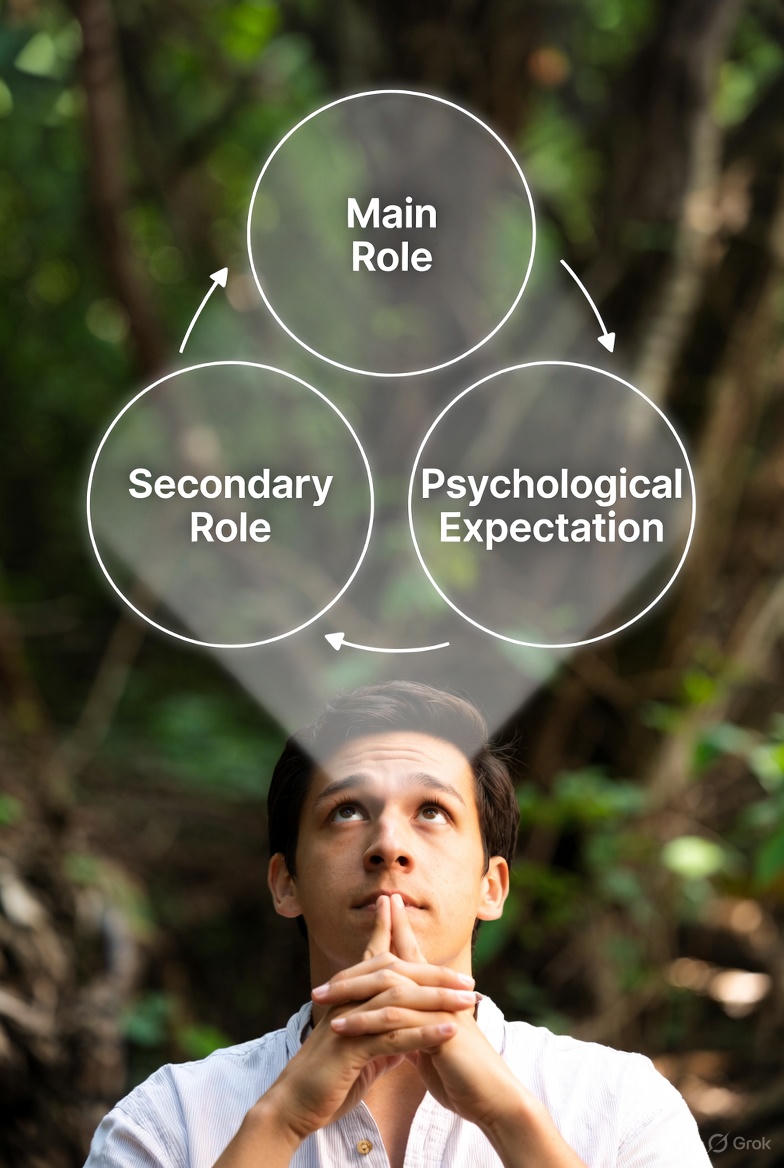
複合空間的三段式判定法
(主角色 × 次角色 × 心理期待)
複合型空間之所以難處理,是因為它同時具備多個「行為主軸」,使得我們在使用文公尺時,無法決定到底應該選擇「財義官本」哪個紅字吉象,拆組達人建議可依下面三步驟執行:
第一步:判定空間「主角色」
主角色,就是這個空間最不可失去的功能。
例:
- 會議室 → 主角色:協作(義)
- 主管室 → 主角色:決策(官)
- 客廳 → 主角色:交流與聚合(義)
- 前台區 → 主角色:迎接(財)
- 書房 → 主角色:穩定、專注(本)
只選一個,就是此空間的核心。
第二步:選擇「次角色」
次角色補足空間的第二需求。
例:
- 會議室也會做決策 → 次角色:官
- 客廳需要舒適的穩定感 → 次角色:本
- 前台也承擔形象 → 次角色:官
- 書房也是小型客席 → 次角色:義
第三步:調整「心理期待」權重
前兩步或許會讓你覺得,文公尺好像是一種空間DNA,好樣生來就已經決定了。但事實上,拆組達人不斷強調,文公尺的在室內設計的應用位置,應該是主觀感受與心理層面上,是協助我們的工具,而不是約束我們的枷鎖。因此我認為即便某空間的原始分類(design logic)給出主/次角色,你仍可依照自己的心理期待調整優先順序。
例如:
- 會議室主角色是「協作」:
→ 為了不產生「會而不議,議而不決」的現象,我們可以選用「官」象強化空間語言的決策權重。 - 玄關主角色是「迎接」:
→ 為了減少家裡的爭執,我們也可選用「本」象帶來安定感。 - 前台主角色是「流動」
→ 老闆也可為了要公司發展日益上升,優先選擇「官」象,而非「財」象。
你完全可以根據你自己的心理期盼,自己客製化設定這個空間,或者裝潢家具的心理語言。
➡ 利用文公尺協助你說出你真正想要的空間語氣,對於此空間或者此一環境的美好祝願。

具體操作方法,四個步驟
將尺寸從「字象」的單一點位,轉為「空間圖形」的座標落點
- 從主角色選主象
- 從次角色補副象
- 確認橫向尺寸落點(寬/深/門口開口)
- 避開黑字(只在關鍵位置必要)
應用例:
會議室
主角色與次角色的認定:協作為主 × 決策為輔
- 主象:義
- 副象:官
尺寸策略:
- 長桌寬度落義象
- 主位前方距離可落官象
- 入口偏財象提高流動性
- 若希望決策更聚焦,可把桌面深度選官象範圍
玄關
主角色與次角色的認定:迎接為主 × 安定為輔
- 主象:財
- 副象:本
尺寸策略:
- 櫃體寬度:財象
- 開口深度:本象
- 若希望回家後更放鬆,可讓整體落點更偏「本」
你會發現:
文公尺不是讓你「抓對象限」
而是讓你抓對空間的語氣與期待。
更細微的實際應用方向
文公尺本身的四大吉象,各自含四個字義:
- 財:財物/寶庫/六合/迎福
- 義:正義/添丁/益利/貴子
- 官:順科/進益/富貴/橫財
- 本:本位/興旺/登科/財至
事實上這些「子象」本都各具自己的象徵意義,在系統上可以形成:
四大字象× 四小子象= 十六位向量座標的空間圖形
講成白話就是:
- 展示面要用「財象中的迎福」嗎?
- 主管位是「官中的順科」還是「官中的富貴」?
- 書房需要「本中的本位」還是「本中的興旺」?
本文不展開說明,下次有空在細細分析,但須要說的是,文公尺在空間規畫的心理語言運用上,不但能現代化,精確化,甚至是可成長,可細化的擴充式語言系統。
給 AI 用的判定指令(非本文主軸)
這邊拆組達人簡單整理了AI生成指令,如果你覺得整個系統還是好難,看不懂,也懶得學,大可以直接將下面這段貼到AI中,請AI協助你們判斷
範例指令(讀者可在 ChatGPT 使用):
請參閱https://blog.iegoffice.com/ feng-shui-luban-ruler-design-meaning一文
根據其定義,主角色(協作)、次角色(決策)、心理期待(提升決策感)
判斷 320cm × 110cm 會議桌的橫向尺寸應落在哪個象限,並說明理由。」
文公尺讓複雜空間變得「可被理解」
文公尺的現代價值,不在於命理,而在於:
✔ 把心理期待翻成可討論的語言
✔ 把空間複合功能拆成可判定的結構
✔ 把尺寸決策變成可追蹤的邏輯
✔ 把使用者的感受,變成可落地的空間語氣
最終,它讓設計師更容易說服、讓使用者更容易理解,也讓空間更貼近人的心理需求。
對不知道自己要什麼的人,文公尺幫助你找到方向。
對知道自己要什麼的人,文公尺幫你定義優先順序。
這才是文公尺在現代室內設計裡真正的價值。
拆組達人空間規畫小教室(FAQ)
Q1. 文公尺會不會限制我?如果我喜歡某個尺寸,但它不在建議象限怎麼辦?
A1. 文公尺不是限制,而是「翻譯器」。
你若偏好某尺寸,它會協助你理解:
→ 你偏好的是「何種心理語氣」。
並幫助確認是否與空間用途一致。如果一致,就無需強求象限,你,才是空間的使用者,你,才是空間的主人。
Q2. 多人使用的辦公空間(例如共用桌、島型工位)如何套用主/次角色?
A2. 辦公空間本質較複雜,建議:
- 桌面尺寸:依主角色(協作多為義象)
- 中央通道:偏財象促進流動
- 主管位區:官象
- 個人抽屜與物品區:本象
用文公尺分組,能使開放式辦公室更有秩序與心理界線。
Q3. 文公尺是否適用所有風格?(日系、北歐、侘寂、英式、工業風…)
A3. 文公尺處理的是「心理語氣」,不是造型風格。
它不會決定材質、線條,但會決定:
→ 什麼尺寸,看起來比較安定?
→ 什麼尺寸,讓空間比較歡迎人?
所以,它能跨風格使用。
延伸閱讀
- 文公尺在室內設計與室內裝修中的現代功能:尺寸與空間語意(前言篇)
- 文公尺四大吉字怎麼用?從「財義官本」讀懂空間用途與家具尺寸(定義篇)
- 文公尺四大吉象 × 三大空間應用指南|室內設計與室內裝潢的尺寸(實務篇)
- 文公尺應用篇|複合用途空間的尺寸判定方法(應用篇)
- 文公尺尺寸對照表|家具與裝潢常用尺寸快速查表(工具篇)
- 文公尺數學邏輯|42.9cm 循環 × 八段落點 × 公分公式換算(公式篇)
以下為英文翻譯版(English Version Below)
Wengongchi Application|Dimension-Judgment Method for Multi-Functional Spaces (Application Chapter)
In real interior design, renovation, and office-furniture planning, very few spaces serve only a single function.
A meeting room may require both collaboration and executive decision-making; an entrance foyer may welcome guests while also storing belongings; a kitchen island may simultaneously support cooking, socializing, and circulation.
These multi-functional spatial demands are precisely where the Wengongchi becomes most powerful—
It helps simplify complex psychological needs and translates them into interpretable, selectable, and traceable spatial language.
The Wengongchi does not “decide for you”; it helps you decide more clearly
For people who “don’t know what they want,” the Wengongchi helps clarify:
➡ What emotional tone do you want this position to give you?
For people who “know clearly what they want,” the Wengongchi helps sort priorities:
➡ Which psychological tone should be given first priority in this space?
This forms the core spirit of this chapter:
The Wengongchi does not make decisions for you—it clarifies what kind of space you truly need.
Three-Stage Judgment Method for Multi-Functional Spaces
(main role × secondary role × psychological expectation)
A multi-functional space is difficult to handle because it contains multiple “behavioral axes,” making it unclear which of the four auspicious zones—Wealth, Harmony, Authority, Foundation—should take precedence.
Disassembly & Assembly Lab recommends the following 3-step method:
Step 1: Identify the “Main Role” of the space
The main role is the function that the space cannot lose.
Examples:
- Meeting room → Main role: Collaboration (Harmony)
- Manager office → Main role: Decision-making (Authority)
- Living room → Main role: Interaction & gathering (Harmony)
- Reception area → Main role: Welcoming (Wealth)
- Study → Main role: Stability and focus (Foundation)
Choose only one—this is the core of the space.
Step 2: Select the “Secondary Role”
The secondary role supplements the secondary need of the space.
Examples:
- Meeting rooms also involve decisions → Secondary role: Authority
- Living rooms also need a sense of comfort and stability → Secondary role: Foundation
- Reception areas also bear branding → Secondary role: Authority
- A study may also host small visitors → Secondary role: Harmony
Step 3: Adjust the priority based on “Psychological Expectations”
The first two steps may make the Wengongchi appear like a fixed spatial DNA. But Disassembly & Assembly Lab repeatedly emphasizes:
The Wengongchi should operate mainly as a psychological-language tool—not as a rigid constraint.
Even if the design logic suggests a main/secondary role,
you may still rearrange the priority based on your emotional expectations.
Examples:
- Meeting room’s main role is “collaboration,”
→ But to avoid “discuss without deciding,” you may boost Authority to strengthen the decision-making tone. - Entrance foyer’s main role is “welcoming,”
→ But to reduce household conflicts, you may choose Foundation for added stability. - Reception’s main role is “flow,”
→ But an owner may choose Authority first to symbolically elevate company growth.
You can fully customize the psychological tone of any space or furnishing.
➡ The Wengongchi helps you articulate the emotional tone you truly want for the space.
Practical Operation: Four Steps
Turning dimensions from a “symbolic point” into a “spatial coordinate”:
- Choose the main zone based on the main role
- Supplement with the secondary zone
- Confirm the horizontal dimension (width / depth / doorway opening)
- Avoid black zones (only critical points require avoidance)
Application Examples
Meeting Room
Main role × Secondary role:Collaboration (Harmony) × Decision-making (Authority)
Main zone:Harmony
Secondary zone:Authority
Dimension Strategy:
- Table width → Harmony zone
- Head-seat clearance → Authority zone
- Entry location → Wealth zone to increase circulation
- If stronger decision-making is desired → Choose deeper tabletop in Authority zone
Entrance Foyer
Main role × Secondary role:Welcoming (Wealth) × Stability (Foundation)
Main zone:Wealth
Secondary zone:Foundation
Dimension Strategy:
- Cabinet width → Wealth zone
- Opening depth → Foundation zone
- If a calmer home atmosphere is desired → Let more dimensions fall into Foundation zone
You will notice:
The Wengongchi is not about “choosing the right quadrant,”
but about choosing the right psychological tone for your space.
More Advanced Practical Directions
Each of the four major auspicious zones contains four sub-meanings:
Wealth: Wealth / Treasure / Harmony / Blessing
Harmony: Justice / Growth / Benefit / Noble offspring
Authority: Advancement / Gain / Prosperity / Windfall
Foundation: Root / Flourishing / Achievement / Arrival of wealth
These “sub-zones” can form:
4 major zones × 4 sub-zones = 16 directional spatial vectors
In plain terms:
- Does your display zone use Wealth → Blessing?
- Is the executive seat Authority → Advancement or Authority → Prosperity?
- Should your study use Foundation → Root or Foundation → Flourishing?
This chapter will not expand further, but note:
The Wengongchi is a modernizable, expandable psychological-language system—not a fixed traditional superstition.
AI-Friendly Prompt (not the main focus of this article)
If the system still feels too complex, you may simply copy the following and paste it into ChatGPT:
Example Prompt (for readers):
“Refer to https://blog.iegoffice.com/feng-shui-luban-ruler-design-meaning
Based on its definitions, main role (collaboration), secondary role (decision-making), and psychological expectation (emphasize decision-making),
determine which auspicious zone best fits a 320cm × 110cm meeting-table dimension and explain why.”
The Wengongchi Makes Complex Spaces Understandable
Its modern value is not fortune-telling but:
✔ Translating psychological intentions into discussable language
✔ Breaking down multi-functional needs into clear structure
✔ Making dimension decisions traceable
✔ Turning user feelings into actionable spatial tone
It makes it easier for designers to persuade clients,
easier for users to understand decisions,
and easier for spaces to reflect human needs.
For those who don’t know what they want → The Wengongchi helps you find direction.
For those who know what they want → The Wengongchi helps define priority.
This is its true value in contemporary interior design.
Disassembly & Assembly Lab – Space Planning Mini FAQ
Q1. Will the Wengongchi restrict me? What if I like a dimension that does not fall in the suggested quadrant?
A1. The Wengongchi is not a restriction—it is a translator.
If you prefer a certain dimension, it helps you understand:
→ Which psychological tone are you gravitating toward?
Then it checks whether that tone matches the spatial function.
If it does—there is no need to force a different quadrant.
You are the user; you are the owner of the space.
Q2. How do we apply the main/secondary role method in multi-user office spaces (shared desks, island workstations)?
A2. Offices are complex; recommended approach:
- Desktop dimensions → Based on the main role (collaboration → Harmony)
- Central aisles → Wealth zone to increase flow
- Manager areas → Authority zone
- Personal drawers / personal storage → Foundation zone
Grouping by Wengongchi helps form clear psychological boundaries in open offices.
Q3. Does the Wengongchi apply to all design styles (Japanese, Nordic, Wabi-sabi, English classic, industrial, etc.)?
A3. The Wengongchi works with psychological tone, not aesthetic style.
It doesn’t decide material or form, but it does influence:
→ What dimensions look more stable?
→ What dimensions feel more welcoming?
Therefore, it can be applied across all interior styles.
Further Reading
- Modern Functions of the Wengongchi in Interior Design and Renovation: Dimensions and Spatial Semantics (Introduction Chapter)
- Understanding the Four Auspicious Characters of the Wengongchi:Space Usage and Furniture Dimensions from”Cai, Yi, Guan, Ben” (Definition Chapter)
- The Four Auspicious Zones of the Wengongchi and Three Major Spatial Application Contexts:Dimensional Considerations in Interior Design and Renovation (Practice Chapter)
- Wengongchi Application Chapter | Dimensional Reasoning for Multi-Use Spaces (Application Chapter)
- Wengongchi Dimension Conversion Table | Quick Reference for Common Furniture and Millwork Sizes (Tools Chapter)
- Wengongchi Mathematical Logic:The 42.9 cm Cycle, Eight-Section Structure, and Centimeter Conversion(Formula Reference Table, 301–530 cm)