
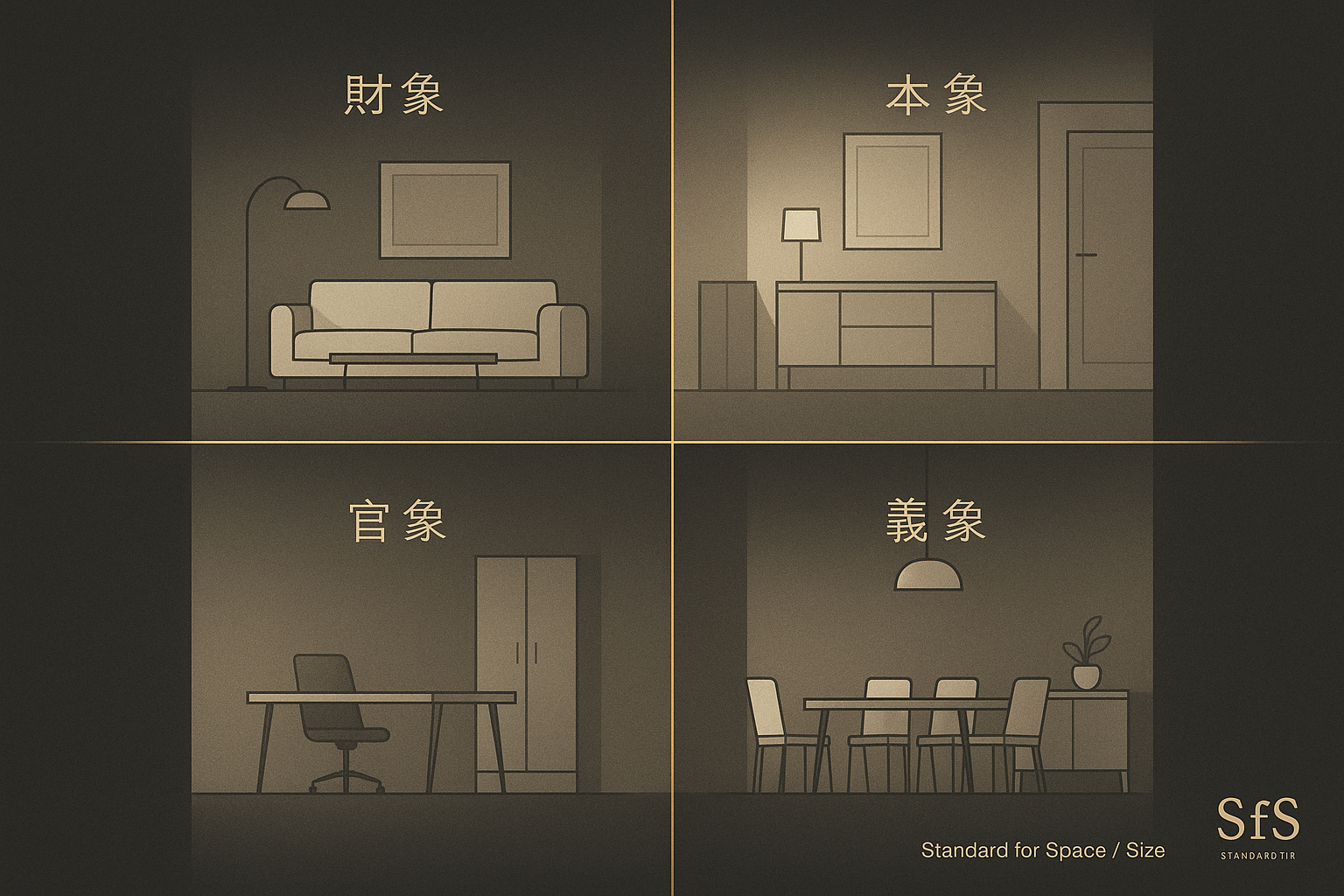
文公尺上的紅字雖被視為吉象,但實際運用上,不同字象其實具有不同的象徵含義,適合的空間、家具與使用場景也不相同。在室內設計與室內裝潢的實務中,「尺寸」會同時影響動線、視覺比例、機能與使用心理;若能將四大吉象與空間用途做出精準對應,規劃櫃體、門框、桌面與收納時會更具方向性。
(特別說明:本文所指的「尺寸」非固定公分值,而是指寬/深在文公尺上落入的紅字區段,其象徵含義會影響空間心理感受與使用行為。)
因此拆組達人整合文公尺的四大吉象,並提出辦公室、商業和居家三大環境,以及常用的裝潢與家具,作出一套「文公尺 × 空間 × 家具」的快速對照矩陣,提供居家、辦公室與商業空間的設計選用參考,如果此時你正煩惱不知道要用哪個紅字?可以查閱此表立刻得到解答。
文公尺空間應用三點小訣竅
- 紅字不代表都適用,仍須對應空間功能與家具屬性。
- 黑字非絕對負面,只需避免落在關鍵位置。
- 趨吉避凶原則:對準吉字=加分;不對準=不扣分;避凶=必要。
四大吉象 × 三大空間 × 裝潢家具分類(查表版)
| 吉象 | 核心意涵 | 適用空間 | 適用裝潢/家具 |
|---|---|---|---|
| 財象 | 流通・資源・迎福・展開 | 業務、前台、展示、玄關 | 櫃台、展示櫃、玄關櫃 |
| 義象 | 協作・支援・服務・調和 | 客廳、餐廳、茶水間、服務區 | 餐桌、公共桌、茶水櫃 |
| 官象 | 威儀・秩序・權責・規範 | 主管室、法務、決策室 | 主管桌、門框尺寸、檔案櫃 |
| 本象 | 穩定・基礎・累積・持續 | 臥室、書房、財會、人事 | 衣櫃、書桌、工作檯、系統櫃 |
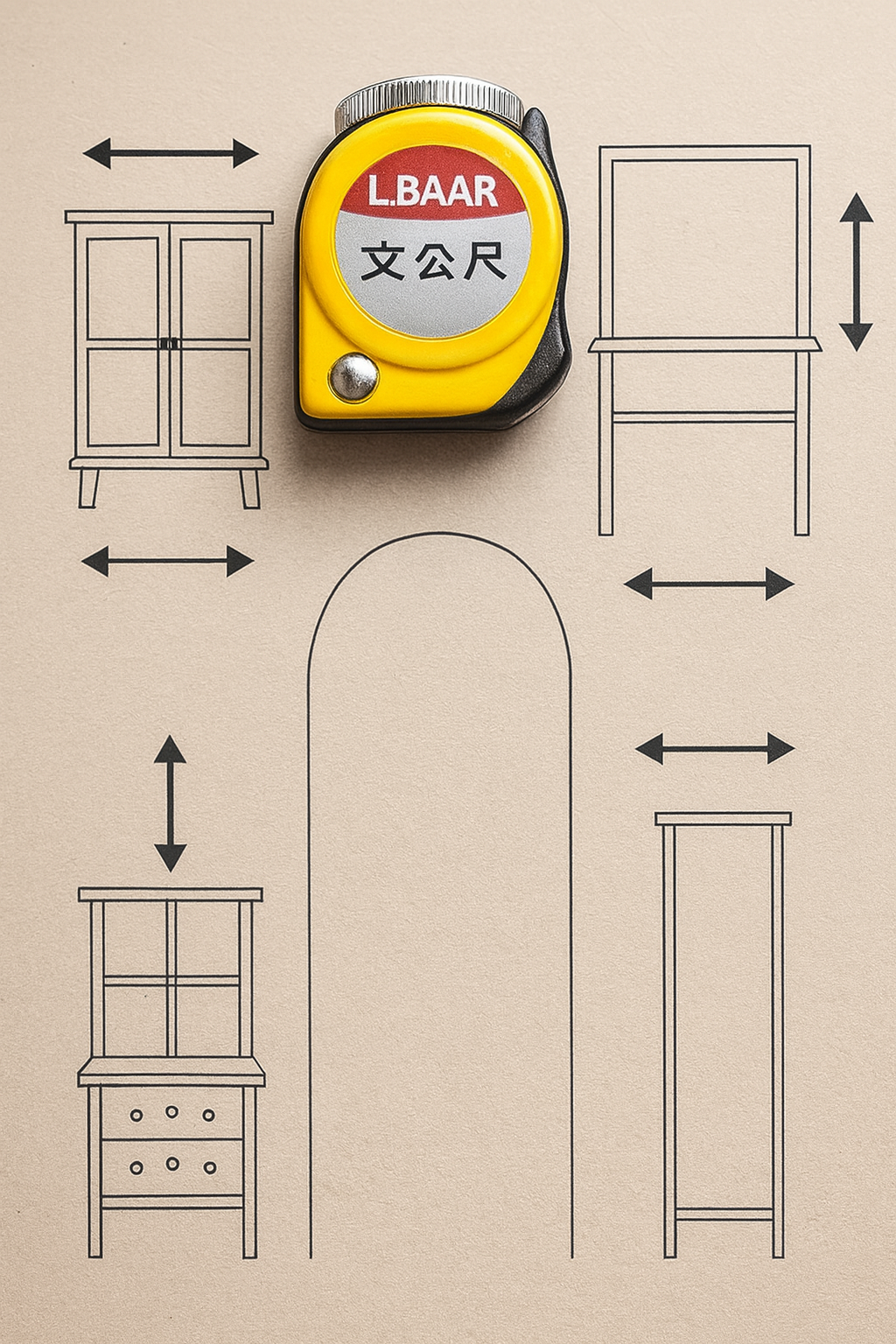
若想理解四大吉象背後的語意、本質與空間心理,請參考文公尺四大吉字怎麼用?從「財義官本」讀懂空間用途與家具尺寸一文,本篇僅作為快速工具。
財象(流通 × 展示 × 接待)
財象適合人流與資訊流動頻繁的空間,例如接待區、陳列面與可視性高的展示櫃。
適用空間
- 辦公室:業務、行銷、前台
- 商業:櫃台、主要動線、展示牆
- 居家:玄關、展示區
適用家具/裝潢
- 前台檯面寬
- 展示櫃、玄關櫃
- 開放式展示面
義象(協作 × 支援 × 共享)
義象能形成溫和、協作與共享氛圍,適用於多人交流使用的空間。
適用空間
- 居家:客廳、餐廳、公共起居
- 辦公室:協作區、茶水間
- 商業:服務台、客席區
適用家具/裝潢
- 餐桌、公共桌
- 客廳櫃體
- 茶水櫃
官象(秩序 × 角色 × 威儀)
官象適合需要角色明確、權責清楚與具決策性的空間。
適用空間
- 主管室
- 法務、管理空間
- 家中書房
適用家具/裝潢
- 主管桌
- 門框尺寸(重要入口)
- 會議桌、檔案櫃
本象(穩定 × 基礎 × 累積)
本象強調沉澱與長時間停留,適合需要專注或日常反覆操作的位置。
適用空間
- 辦公室:財會、人事、行政
- 居家:臥室、書房、更衣間
- 商業:後倉、庫存區
適用家具/裝潢
- 衣櫃、系統櫃
- 書桌、工作檯
- 儲物櫃、掃具櫃
黑字如何處理?
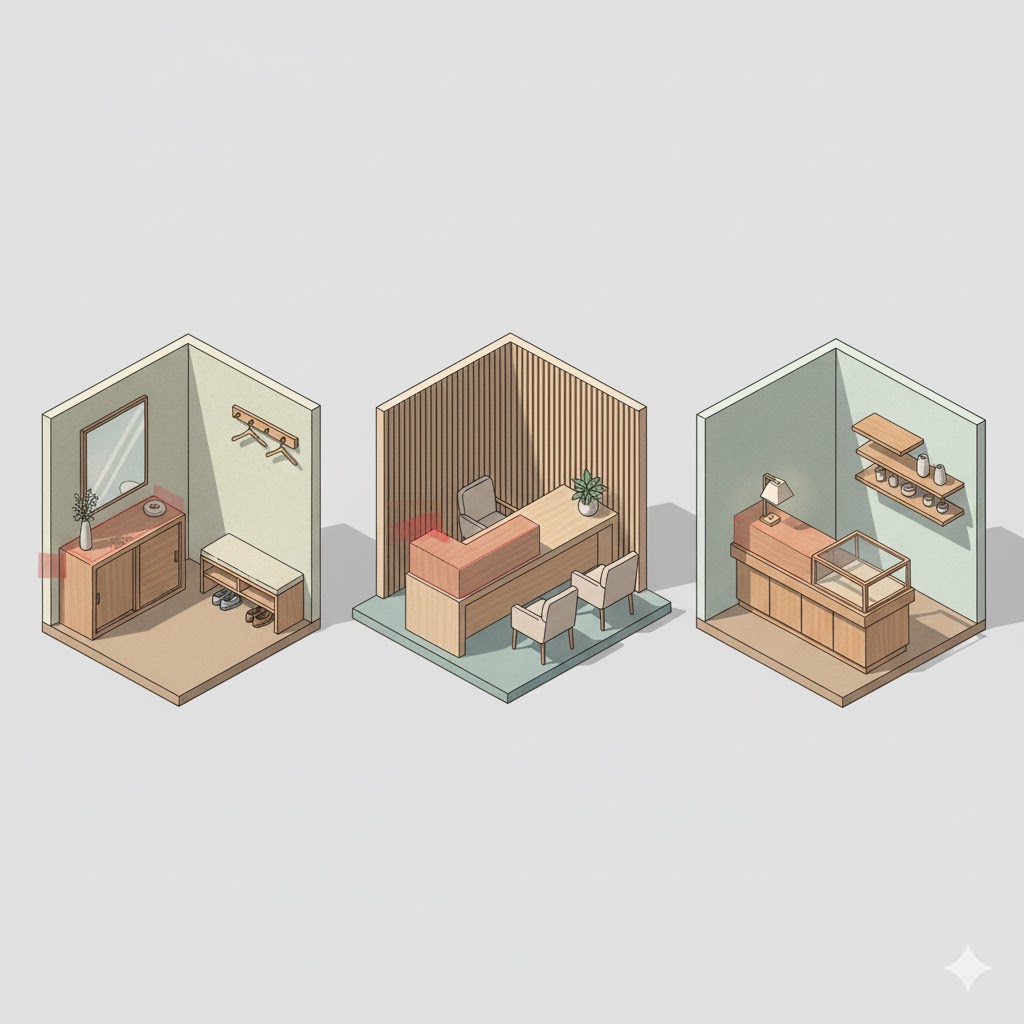
黑字代表不便與阻礙,建議避開以下關鍵位置:
- 大門
- 臥室門
- 收銀台
- 主管桌
- 主要收納櫃
若空間限制無法避免,可調整深度、寬度等「另一方向」尺寸落點以降低負面影響。
拆組達人空間規畫小教室(FAQ)
Q1. 文公尺應用在室內設計與室內裝潢時,最重要的原則是什麼?
核心原則是「避凶優先、功能對應、加分落點」。
文公尺的運用並非「好/壞」的二元判斷,而是四大吉字依其特性形成的「象限落點」系統;因此不同字象在空間中自然重疊是常態,尤其在具複合性用途的區域(如玄關、餐廳、展示櫃)。實務上只要避免黑字落在主要控制方向,其餘則可依空間特性選擇最能支持使用目的的象。
文公尺是輔助工具,最終仍以動線、人體工學與使用需求為優先。
Q2. 廚房檯面、窗戶或走道寬度可以用文公尺嗎?
A2.可以。凡具體可量測尺寸皆可對應文公尺,例如廚房流理台後常留 85~90cm的距離,此區段多落在本象或義象,走道寬度則偏財象常見的流通意涵。落點僅作為加分參考,主要仍以安全性、習慣動線與工法規範為主。
Q3. 辦公家具或桌面尺寸需要完全落在吉象嗎?
A3.不需要。書桌深度 60~70cm、系統櫃深度 40~60cm,多會自然落在本象或財象;只要不落入黑字關鍵位置即可。尺寸配置仍以工作效率、手部伸展、椅面高度與動線間距等室內設計原則優先。
延伸閱讀
- 文公尺在室內設計與室內裝修中的現代功能:尺寸與空間語意(前言篇)
- 文公尺四大吉字怎麼用?從「財義官本」讀懂空間用途與家具尺寸(定義篇)
- 文公尺四大吉象 × 三大空間應用指南|室內設計與室內裝潢的尺寸(實務篇)
- 文公尺應用篇|複合用途空間的尺寸判定方法(應用篇)
- 文公尺尺寸對照表|家具與裝潢常用尺寸快速查表(工具篇)
- 文公尺數學邏輯|42.9cm 循環 × 八段落點 × 公分公式換算(公式篇)
以下為英文翻譯版(English Version Below)
**Four Auspicious Zones × Three Space Types × Furniture Categories
(Quick-Reference Table)**
Although the red segments on the Wengongchi (Luban ruler) are traditionally considered auspicious, each auspicious zone actually carries a different symbolic meaning and is suitable for different spaces, furniture types, and usage scenarios.
In real interior design and renovation practice, dimensions influence circulation, visual proportion, functional usability, and psychological comfort.
When the four auspicious zones are precisely matched to the space’s intended purpose, decisions for cabinet sizing, door-frame openings, tabletops, and storage layout become much clearer and more directional.
(Note: In this article, “dimension” does not refer to a fixed centimeter value.
It refers to the width/depth range that falls into a specific red segment on the Wengongchi.
Each segment carries symbolic meaning that affects how users perceive and behave within the space.)
For this purpose, Disassembly & Assembly Lab integrates the four auspicious zones with three major spatial environments—office, commercial, residential—together with commonly used fixtures and furniture, forming a “Wengongchi × Space × Furniture” quick-reference matrix.
This provides a practical guide when selecting dimensions for residential, office, or commercial projects.
If you are unsure which red segment applies to your scenario, the matrix gives you an immediate answer.
Three Tips for Applying the Wengongchi in Space Planning
1. Not every red segment applies universally
Each auspicious zone must still correspond to the spatial function and the nature of the furniture.
2. Black segments are not absolute negatives
They simply need to be avoided in critical control points, not in every possible dimension.
3. Principle of “Enhance the Auspicious, Avoid the Inauspicious”
- Aligning with an auspicious zone = a plus
- Not aligning with an auspicious zone = no penalty
- Avoiding black zones = necessary safety measure
| Auspicious Zone | Core Meaning | Applicable Spaces | Applicable Fixtures / Furniture |
|---|---|---|---|
| Wealth Zone (財象) | Flow・Resources・Welcoming・Expansion | Business areas, reception, display zones, entrance foyers | Reception counters, display cabinets, entrance cabinets |
| Harmony Zone (義象) | Collaboration・Support・Service・Balance | Living rooms, dining areas, pantries, service areas | Dining tables, shared tables, pantry cabinets |
| Authority Zone (官象) | Dignity・Order・Responsibility・Formal Structure | Manager rooms, legal/administrative areas, decision rooms | Executive desks, door-frame dimensions, filing cabinets |
| Foundation Zone (本象) | Stability・Fundamentals・Accumulation・Continuity | Bedrooms, studies, accounting, HR departments | Wardrobes, study desks, work counters, system cabinets |
If you want to understand the deeper semantics, essence, and spatial psychology behind the four auspicious zones, please refer to the article
“How to Use the Four Auspicious Zones of the Wengongchi? Interpreting Spatial Functions and Furniture Dimensions Through Wealth / Harmony / Authority / Foundation.”
This chapter serves only as a quick-use tool.
Wealth Zone (財象|Flow × Display × Reception)
The Wealth Zone is suitable for areas with high circulation of people and information—such as reception zones, display surfaces, and visually exposed cabinets.
Applicable Spaces
Office: Sales, marketing, reception
Commercial: Counters, primary circulation routes, feature/display walls
Residential: Entrance foyer, display area
Applicable Fixtures / Furniture
- Reception counters
- Display cabinets, entrance cabinets
- Open display surfaces
Harmony Zone (義象|Collaboration × Support × Sharing)
The Harmony Zone creates a gentle, collaborative, and shared atmosphere—ideal for multi-user or interaction-based spaces.
Applicable Spaces
Residential: Living room, dining room, family common areas
Office: Collaboration zones, pantries
Commercial: Service counters, seating areas
Applicable Fixtures / Furniture
- Dining tables, communal tables
- Living-room cabinetry
- Pantry cabinets
Authority Zone (官象|Order × Role × Dignity)
The Authority Zone suits spaces requiring clear roles, responsibilities, and decision-making authority.
Applicable Spaces
Manager rooms
Legal and administrative areas
Home studies
Applicable Fixtures / Furniture
- Executive desks
- Door-frame dimensions (important entrances)
- Meeting tables, filing cabinets
Foundation Zone (本象|Stability × Fundamentals × Accumulation)
The Foundation Zone emphasizes grounding and long-term use—ideal for positions requiring focus or repeated daily tasks.
Applicable Spaces
Office: Accounting, HR, administration
Residential: Bedroom, study, dressing room
Commercial: Back storage, stockroom
Applicable Fixtures / Furniture
- Wardrobes, system cabinets
- Study desks, work counters
- Storage cabinets, cleaning-tool cabinets
Applying the Wengongchi Red Segments (Wealth / Authority / Foundation / Harmony)
(title repeated as in original)
How to Handle the Black Segments?
Black segments represent inconvenience or obstruction and should be avoided in the following critical positions:
- Main entrance door
- Bedroom door
- Cashier counter
- Executive desk
- Primary storage cabinets
If spatial constraints make them unavoidable, you may offset the impact by adjusting the dimension in the other direction (width/depth) to land in a more positive segment.
Disassembly & Assembly Lab – Space Planning Mini FAQ
Q1. What is the most important principle when applying the Wengongchi to interior design and renovation?
The core principle is:
“Avoid inauspicious zones first → match spatial function → align with auspicious zones as a bonus.”
The Wengongchi is not a binary “good vs. bad” system.
The four auspicious zones each correspond to a semantic quadrant, and overlaps naturally occur within multi-functional spaces (e.g., entrances, dining areas, display cabinets).
In practice, as long as black zones are avoided in major control directions, the rest can be chosen based on which auspicious zone best supports the intended use.
The Wengongchi is an assistive tool; circulation, ergonomics, and user needs always take priority.
Q2. Can kitchen countertops, windows, or hallway widths be matched to the Wengongchi?
Yes.
Any measurable dimension can correspond to the Wengongchi.
For example, kitchen clearance of 85–90 cm behind the counter often falls in Foundation or Harmony zones; hallways often align with the flow-related Wealth zone.
These are bonus indicators, while safety, circulation habits, and code requirements must remain primary.
Q3. Do office furniture or desk dimensions need to fall entirely within auspicious zones?
No.
Typical desk depths (60–70 cm) and system-cabinet depths (40–60 cm) naturally fall within Foundation or Wealth zones.
As long as the critical dimension doesn’t land on a black segment, it is acceptable.
Dimension choices should still prioritize:
- Work efficiency
- Arm-reach comfort
- Chair height
- Circulation spacing
- Other interior-design principles
urther Reading
- Modern Functions of the Wengongchi in Interior Design and Renovation: Dimensions and Spatial Semantics (Introduction Chapter)
- Understanding the Four Auspicious Characters of the Wengongchi:Space Usage and Furniture Dimensions from”Cai, Yi, Guan, Ben” (Definition Chapter)
- The Four Auspicious Zones of the Wengongchi and Three Major Spatial Application Contexts:Dimensional Considerations in Interior Design and Renovation (Practice Chapter)
- Wengongchi Application Chapter | Dimensional Reasoning for Multi-Use Spaces (Application Chapter)
- Wengongchi Dimension Conversion Table | Quick Reference for Common Furniture and Millwork Sizes (Tools Chapter)
- Wengongchi Mathematical Logic:The 42.9 cm Cycle, Eight-Section Structure, and Centimeter Conversion(Formula Reference Table, 301–530 cm)